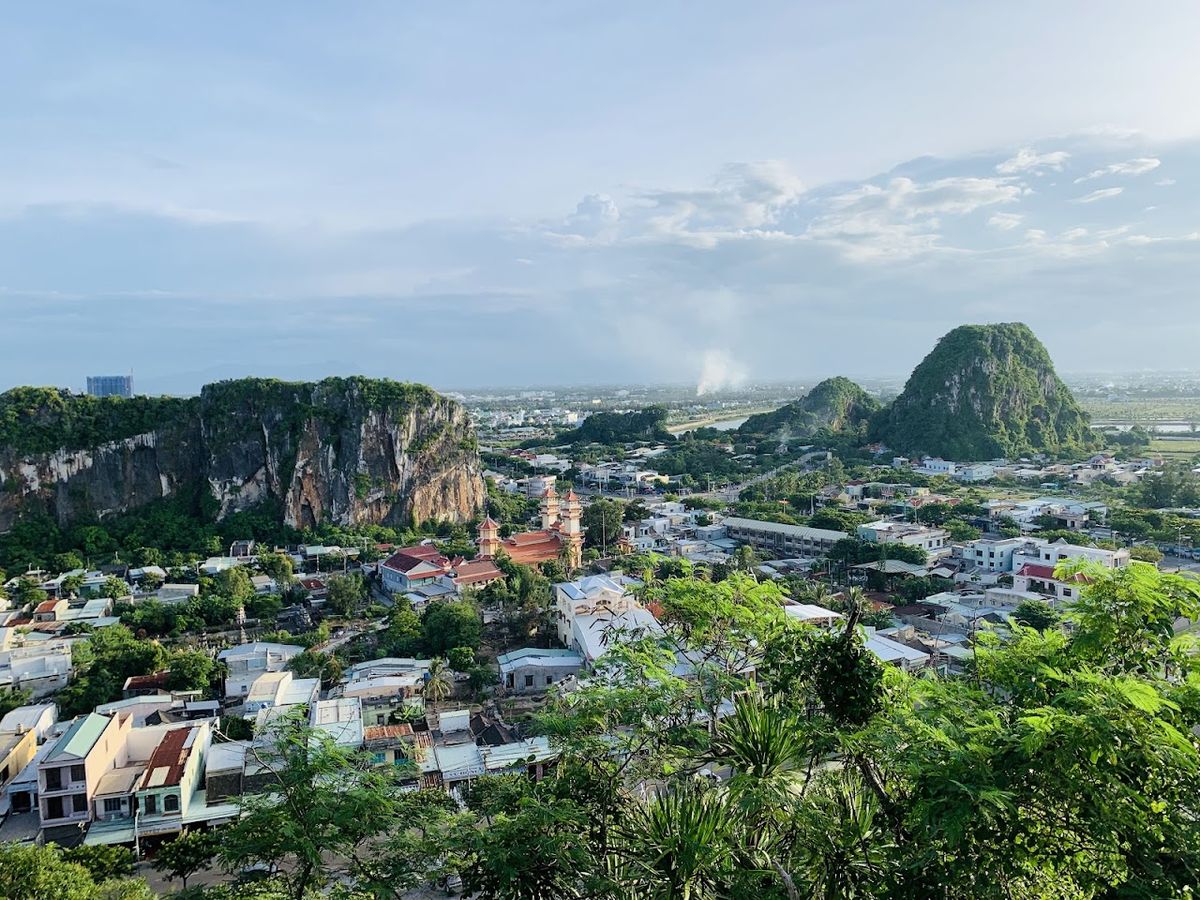
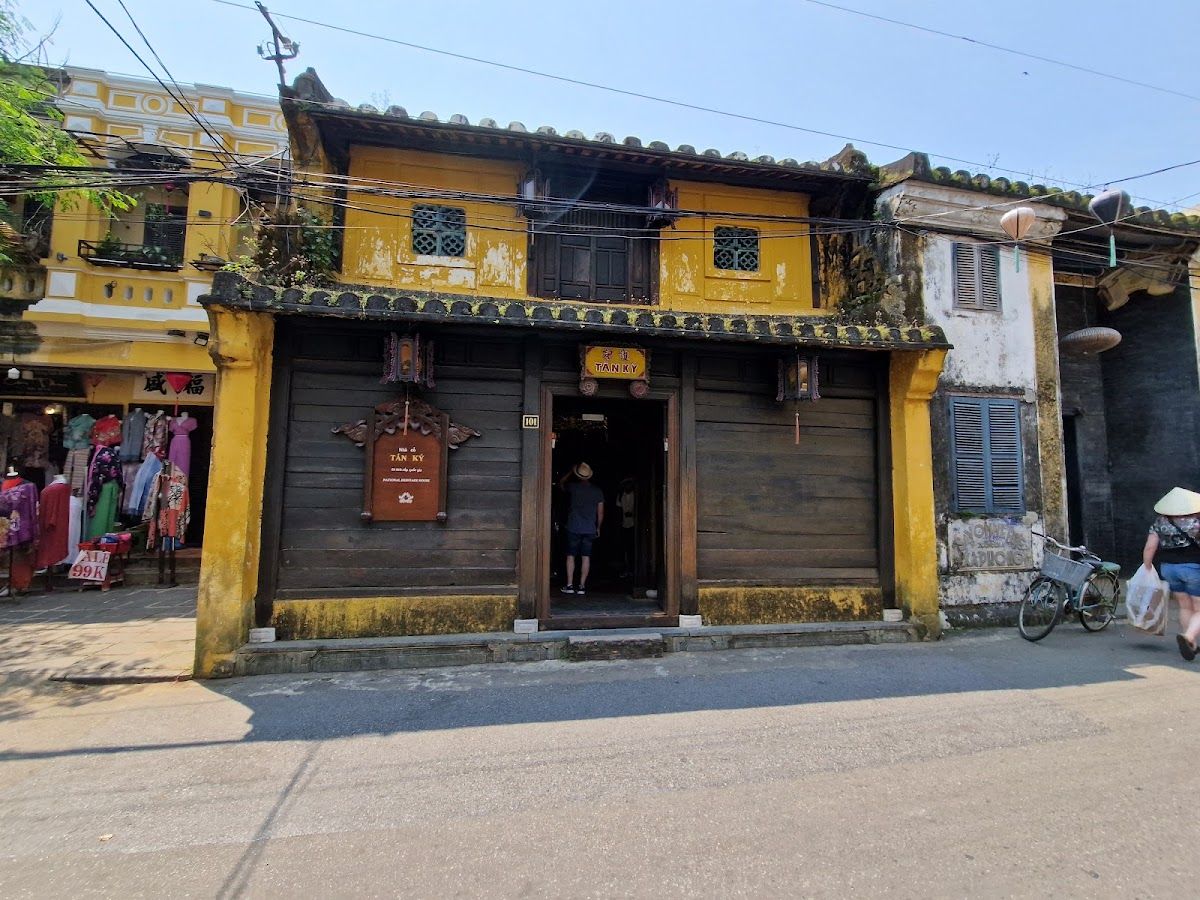
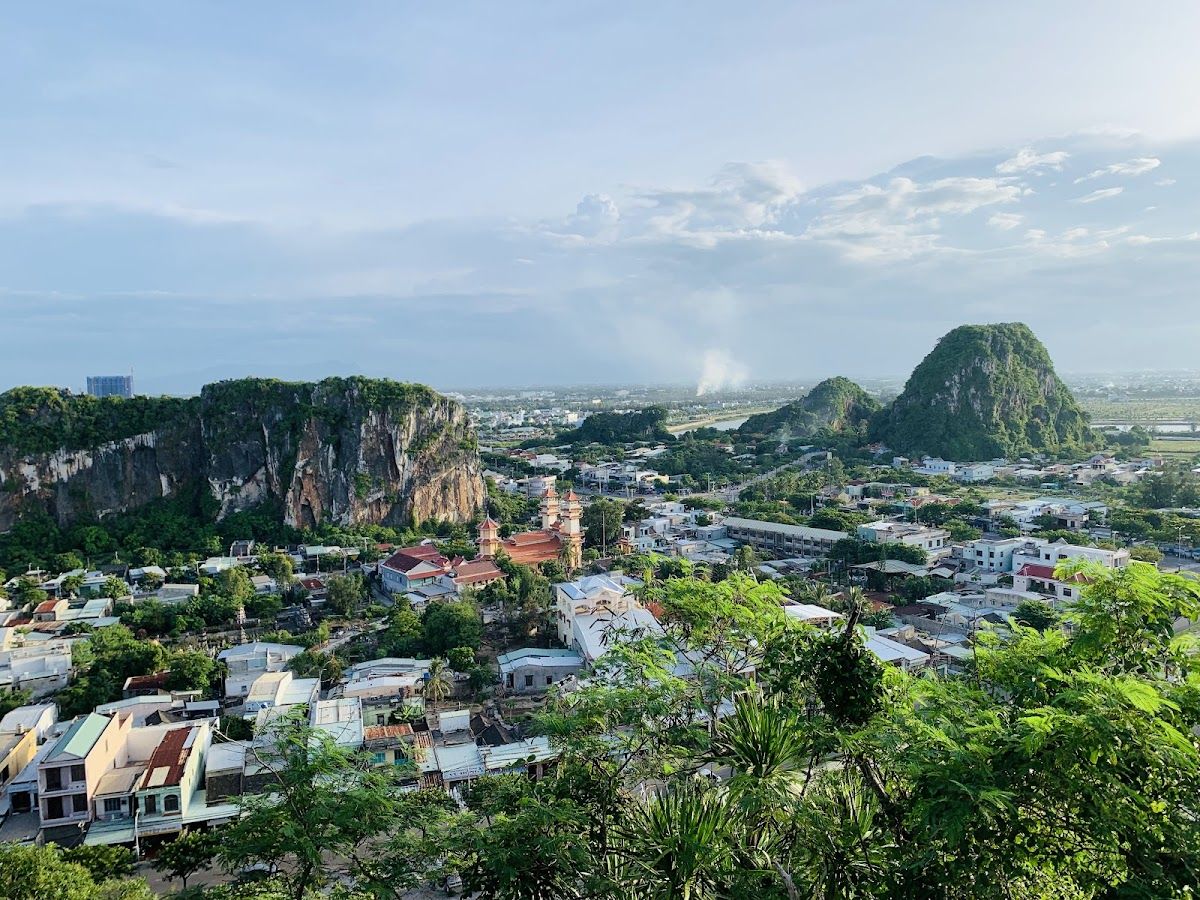

Five marble and limestone hills rise out of the coastal flats 9km south of Da Nang. They look dramatic from the road. Most tourists stop for an hour, take the lift up the main hill, poke around a cave, and leave. If you time it right and know where to go, it’s a proper two hours — cave shrines, natural light shafts, carved Buddha heads, and a view across the coast that earns itself.
Quick facts
- Only Thuy Son (Water Mountain) is open. The other four are either closed or have nothing to see.
- Entry: ₫40,000 per adult (~$1.60 USD). Children under 6 free.
- Lift: ₫15,000 one-way, ₫30,000 return. Or walk the ~156 steps for free.
- Am Phu Cave is off the main route and costs an extra ₫20,000 — worth it.
- Open: 7:00am–5:30pm daily.
- Time needed: 1.5–2 hours if you’re doing it properly.
- Best move: Arrive at 7am. Cooler, quieter, and the light through the cave shafts is better.
- En route to Hoi An? This is a natural stop — it’s on the way south.
Key facts
| Entry fee | ₫40,000 per adult; children under 6 free |
| Am Phu Cave | ₫20,000 extra (purchased separately at the cave entrance) |
| Lift (one-way) | ₫15,000 |
| Lift (return) | ₫30,000 |
| Hours | 7:00am – 5:30pm daily |
| Location | 9km south of Da Nang city centre |
| Time needed | 1.5–2 hours |
The five mountains — and why you’re only visiting one
The Marble Mountains are named after the five elements: Thuy Son (Water), Moc Son (Wood), Hoa Son (Fire), Kim Son (Metal), and Tho Son (Earth). It’s a tidy concept. In practice, only Thuy Son has caves, pagodas, and paths open to visitors. The others are either off-limits or just hills with nothing at the top. Don’t waste time trying to access them.
Everything below is about Thuy Son.
Getting up there
You have two options: the lift or the stairs.
The lift runs from the base on both the north and south sides. ₫15,000 one-way gets you to the top of Thuy Son in about 90 seconds. It’s worth it on the way up, especially in the midday heat. Many people take the lift up and walk down — the stairs aren’t brutal, just steep.
The stairs (roughly 156 steps on the main ascent) are free and give you a better feel for the hillside as you climb. If you’re reasonably fit and going early when it’s cool, walk up. You’ll earn the view.
Pay entry at the gate before you go up. Keep your ticket — it may be checked inside.
Huyen Khong Cave
This is the highlight. Huyen Khong is the largest cave on Thuy Son — a long, high chamber carved by water over millennia and later converted into a war-era sanctuary. The ceiling has several natural openings where shafts of light drop straight down onto the altars and Buddha figures below. Go in the morning and those shafts are theatrical.
During the American War, the cave was used as a field hospital and weapons cache by the Viet Cong — the Americans occasionally bombed it from above, and you can see the blast holes in the ceiling. That context makes the light shafts feel less picturesque and more charged.
Altars and shrines line the back walls, incense burning in front of seated Buddhas. It’s still an active place of worship. Dress appropriately: covered shoulders and knees.
Take your time in here. Most people rush through. The light changes as the sun moves.
Tang Chon Cave
Smaller than Huyen Khong and less dramatic, but worth the short detour. Tang Chon is a narrower cave with Buddhist carvings cut into the walls — faces and figures that have been worked into the natural rock rather than placed in front of it. The cave opens onto a small clearing with a pagoda and some tree cover.
It’s quieter than Huyen Khong. If you want five minutes away from the tour groups, go here.
Am Phu Cave
Am Phu means “Hell” in Vietnamese. This cave is located outside the main Thuy Son compound on the road below — you’ll see signs near the base. Entry costs an extra ₫20,000 and is purchased separately at the cave entrance.
The cave descends into a series of chambers depicting the afterlife: sinners being punished, judges, demons, scenes carved into the rock and rendered in coloured paint. It’s kitsch by some standards. It’s also strange in a way that earns the detour — especially if you’ve already done the more serene pagoda caves above.
The descent is steep and the lighting is dim. Watch your footing.
Linh Ung Pagoda and Tam Thai Pagoda
Two pagodas sit near the top of Thuy Son. Tam Thai Pagoda is the older of the two — originally built in the 17th century, rebuilt several times since.
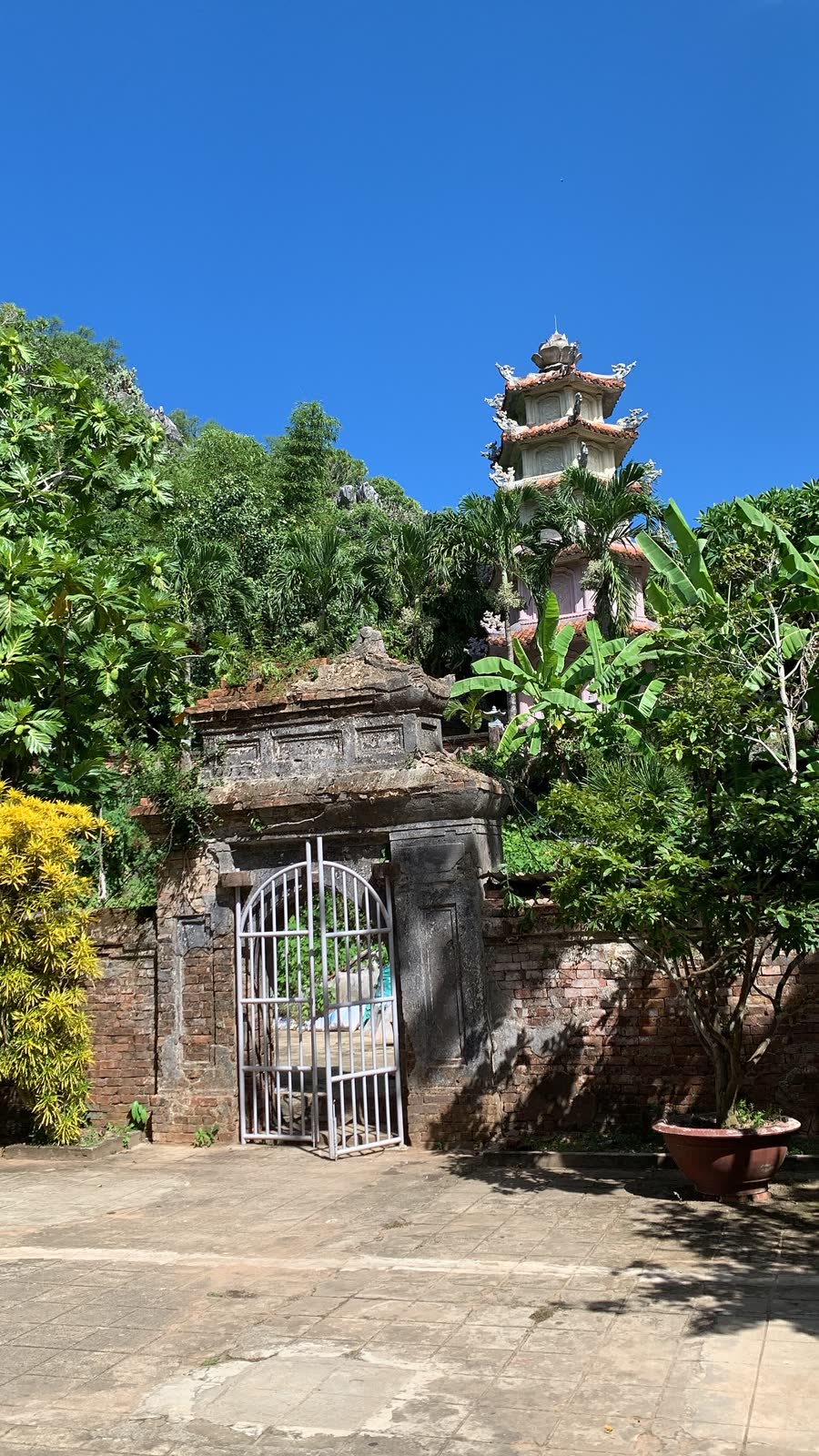
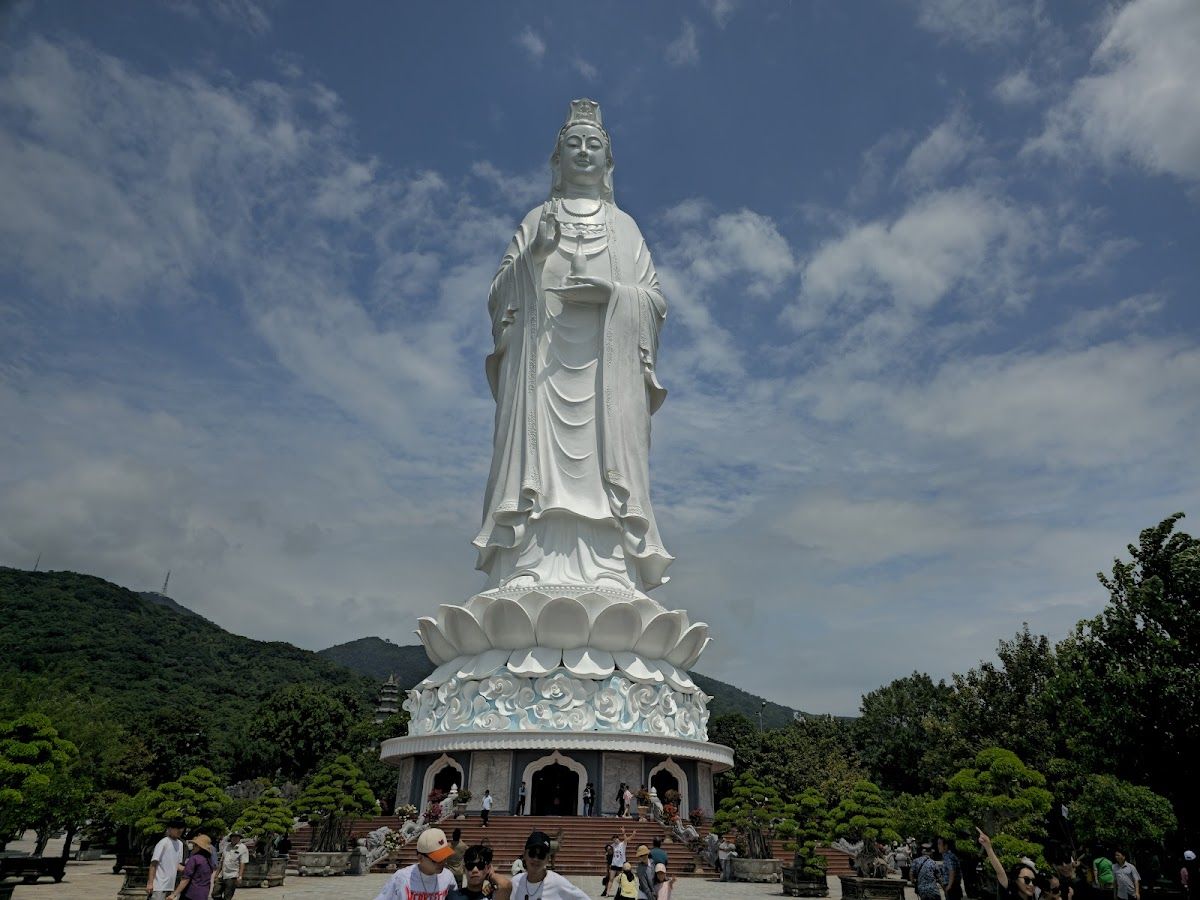
It’s a working temple with monks in residence and feels lived-in rather than preserved-for-tourists. Linh Ung Pagoda is more photogenic, with a large white Buddha figure visible from outside. Both are worth a look as you move between caves.
Neither is a major destination on its own. Think of them as context: they show Thuy Son has been a pilgrimage site for centuries, not just a tourist attraction.
Remove shoes before entering any pagoda.
The viewpoints
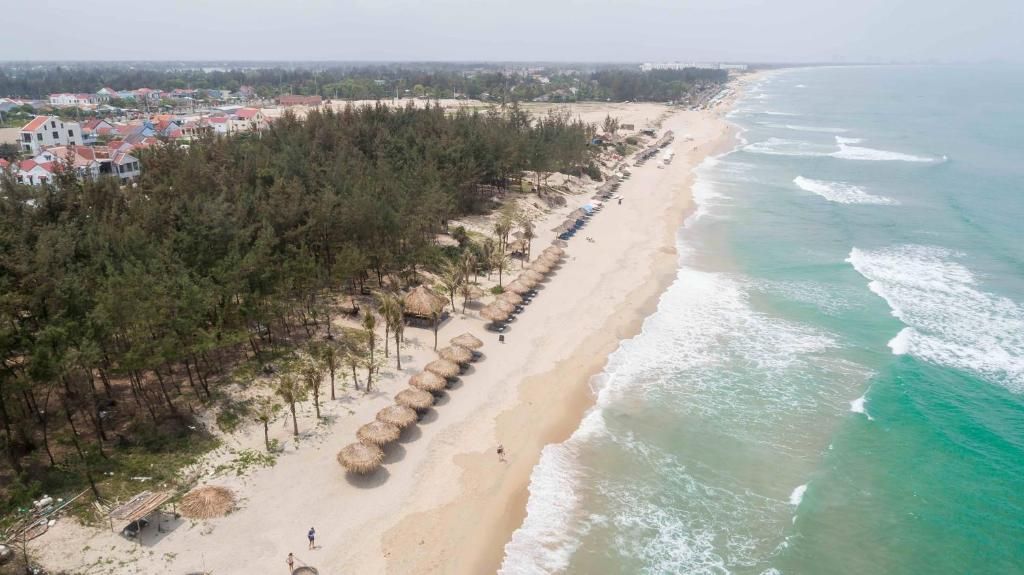
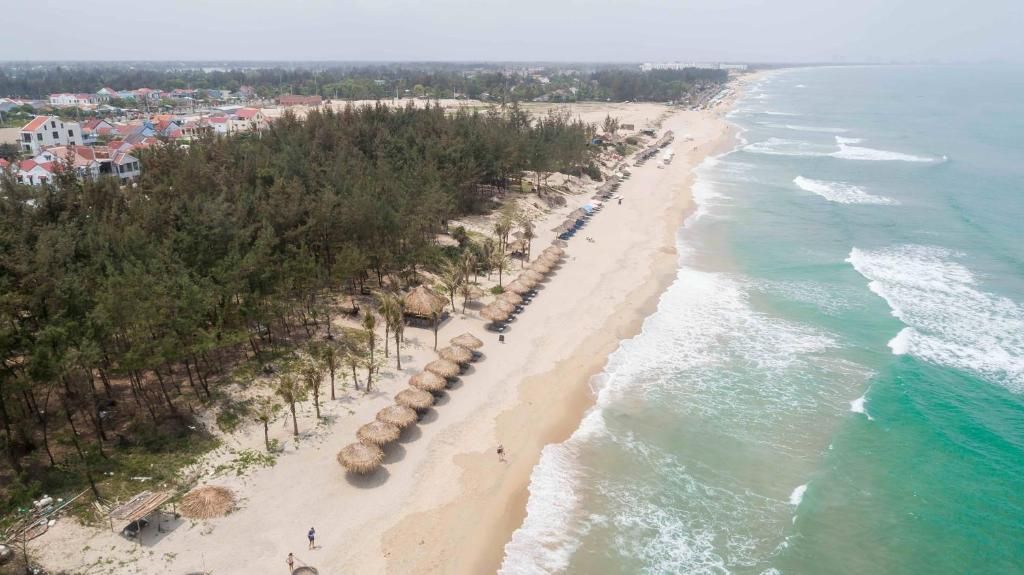
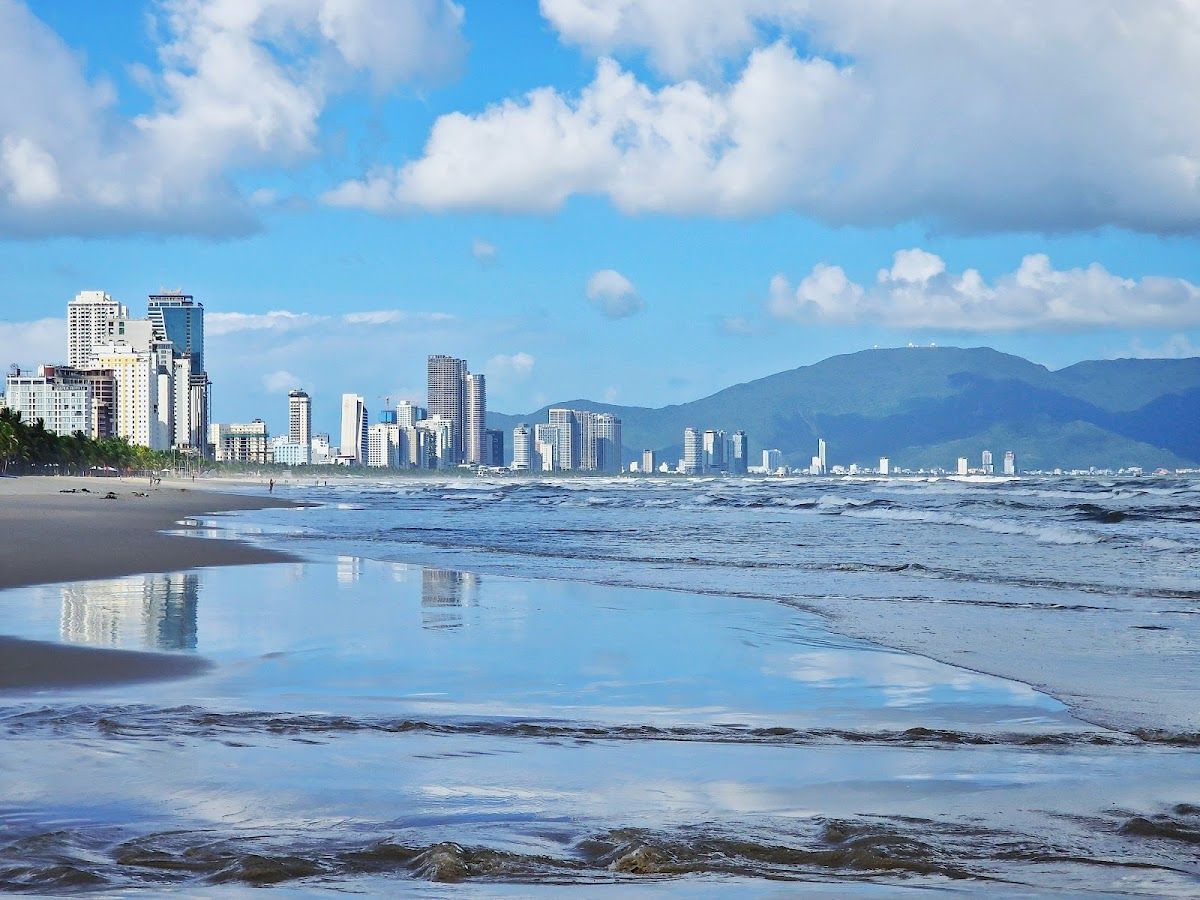
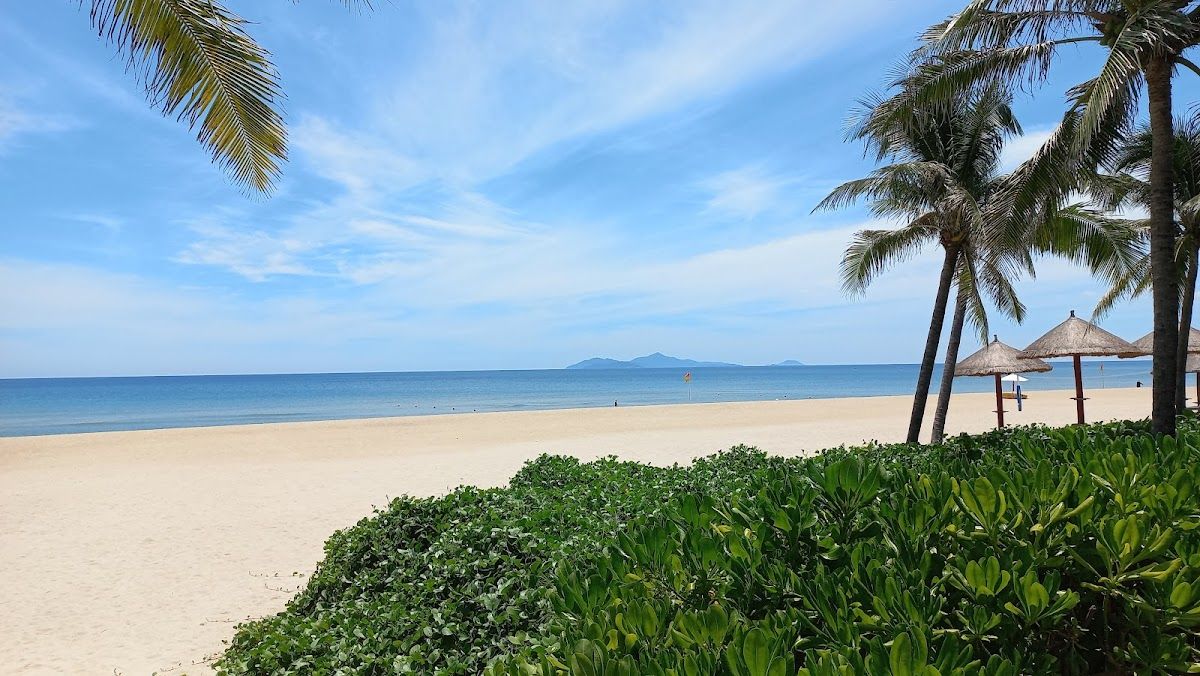
There are two main spots at the top of Thuy Son where the tree cover breaks and you get a clear view out. One faces east toward the coast — you can see Non Nuoc Beach stretching south, which is one of the better beaches near Da Nang and is basically at the foot of the mountains. On a clear morning the South China Sea sits flat and pale behind it.
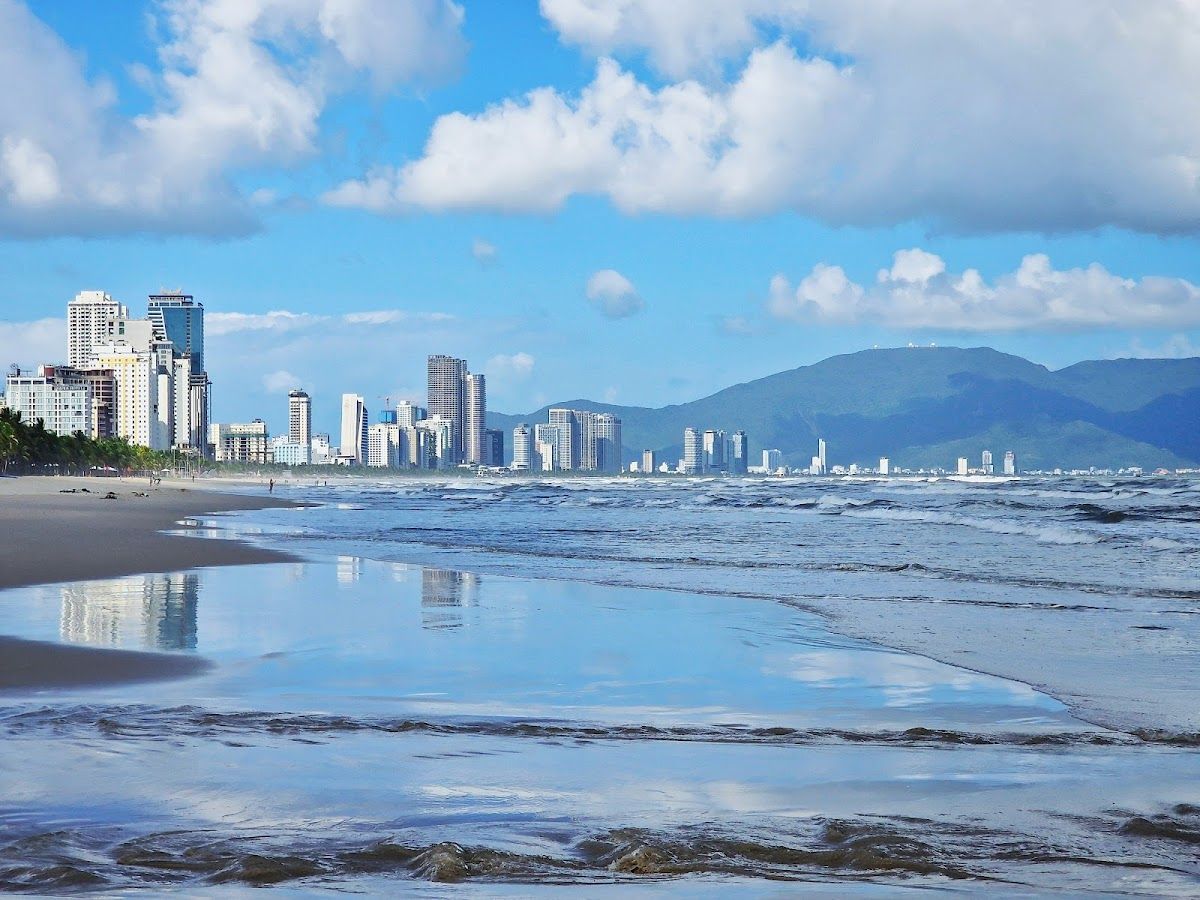
The other viewpoint faces north toward Da Nang city — the Han River bridges, the skyline, the hills behind the city. It’s a good orientation point early in a visit.
Neither viewpoint requires any special route. Just walk to the edge of the main paths and look out. Skip the selfie spots that are set up for a fee — the natural edges are better.
Non Nuoc Stone Carving Village
At the base of the Marble Mountains, along the road that runs between the hills and the beach, workshops line both sides selling carved marble and stone. This is Non Nuoc Stone Carving Village — one of the older craft traditions in Da Nang, though it’s very much a commercial enterprise now.
The scale of the work is worth seeing. Carvers sit in open workshops chiselling figures from blocks of marble: Buddhas, dragons, traditional faces, abstract forms. The dust is constant. The noise of grinders and chisels carries down the street.
You’re not obligated to buy anything. A 20-minute walk down the main strip gives you a clear picture of how the work is done and what’s on offer. If you do want to buy, prices are negotiable and quality varies — look for clean lines and consistent finish. The cheaper pieces are often machine-assisted; the more expensive hand-carved work shows tool marks up close.
Most of the marble isn’t from the Marble Mountains themselves anymore — the hills are protected and quarrying stopped decades ago. The stone comes from elsewhere in Vietnam.
What to skip
The four other mountains (Moc Son, Hoa Son, Kim Son, Tho Son) are closed to visitors. You may see signage or paths that suggest otherwise — they go nowhere open. Don’t spend time on it.
The souvenir stalls immediately outside the main gate sell the same marble pieces as the carving village, usually at higher prices and lower quality. Buy from the village if you’re buying at all.
Avoid visiting between 10am and 3pm if you have any flexibility. The caves stay cool but the paths between them are exposed, the lift queues get long, and the tour groups from Da Nang city fill the main spaces.
Getting there
From Da Nang city centre, a Grab car runs ₫80,000–₫120,000 depending on traffic. A Grab bike is ₫50,000–₫80,000. The ride takes around 20–25 minutes.
If you’re staying in one of the hotels near the beach or non-nuoc area, you may be close enough to walk or hire a scooter for a few hours.
The Marble Mountains sit directly on the road south to Hoi An — National Highway 1. If you’re heading to Hoi An for the day, stop here on the way rather than backtracking. Ask your Grab driver to wait (agree on a price beforehand) or simply book a new one from the mountain when you’re done.
There’s no regular public bus that runs directly here from the city centre. Some tourist minibuses include the Marble Mountains as a stop on a Da Nang day tour — useful if you don’t want to sort transport yourself.
Best time to visit
7:00am when it opens. This is the clear answer.
The temperature is manageable, the light through the cave openings is angled and interesting, and you’ll have Huyen Khong largely to yourself for the first 20–30 minutes before the tour groups arrive. By 9am the main cave is busy. By 11am it’s crowded.
If 7am isn’t possible, late afternoon (3:30pm onwards) is the next best window — crowds thin and the heat drops. The site closes at 5:30pm so you have roughly two hours, which is enough for Thuy Son properly.
Avoid Saturdays and Sundays in peak season (November–March) unless you’re going at opening time.
Verdict
Thuy Son on its own is worth ₫40,000 easily. The caves are the reason to go — Huyen Khong in particular is one of the more unusual spaces in central Vietnam, where the war history and active Buddhist worship sit in the same room under shafts of natural light. The viewpoint is a bonus. The stone carving village adds a useful 20 minutes if you walk the strip.
Go early. Spend two hours. Take the lift up if it’s hot, walk down. Add Am Phu Cave if you have the appetite for it. Then continue south. The mountains sit on the way to Hoi An, which the Da Nang to Hoi An guide covers, and they are the morning of option B in the 3-day itinerary.
FAQ
How much does it cost to visit the Marble Mountains?
Entry is ₫40,000 per adult. Children under 6 are free. The lift is ₫15,000 one way or ₫30,000 return. Am Phu Cave, below the main compound, is an extra ₫20,000 bought at that cave.
Which of the five mountains is open?
Thuy Son, the Water Mountain. Moc Son, Hoa Son, Kim Son and Tho Son are closed or have nothing to see. Don’t spend the morning looking for a way up the others.
How long do I need?
An hour and a half to two hours if you do Huyen Khong, Tang Chon, the pagodas and a viewpoint. Add time if you walk the stone-carving village at the base. Arrive at 7am, when the site opens.
Can I pair this with the beach or Hoi An?
Yes. Non Nuoc beach is at the foot of the hills. Hoi An is further south on the same road, so a private car can stop here on the way rather than coming back later.